
 EN
EN
 ar
ar bg
bg hr
hr cs
cs da
da nl
nl fi
fi fr
fr de
de el
el hi
hi it
it ko
ko no
no pl
pl pt
pt ro
ro ru
ru es
es sv
sv tl
tl iw
iw id
id lv
lv lt
lt sr
sr sk
sk sl
sl uk
uk vi
vi et
et hu
hu th
th tr
tr fa
fa ms
ms hy
hy ka
ka ur
ur bn
bn mn
mn ta
ta kk
kk uz
uz ku
ku
Real-Time Dam Safety Alerts with Differential Pressure Water Level Sensors
Key Takeaways An alert chain needs more than a sensor: define field in...

Displacement Crack Gauge for Structural Health Monitoring
Cracks in concrete, rock, or masonry don’t always spell disaster, but ignoring their movement often does. Measuring how a crack opens, closes, or shifts over time tells engineers whether a structure is stable or heading for trouble. A displacement crack gauge captures these tiny changes — sometimes fractions of a millimeter — and turns them into actionable data. Kingmach Measurement & Monitoring Technology produces instruments that bridge the gap between field conditions and reliable readings. Our displacement crack gauges come out of years of geotechnical and structural monitoring experience, where custom requests and harsh environments are the norm. Whether you’re tracking hairline fissures in a heritage building or monitoring expansion joints on a bridge, the gauge needs to hold up against weather, vibration, and time. We focus on making that happen — with simple mounting, sensor options that fit your readout equipment, and a support team that knows the difference between a lab spec and a real-world site. The result: a tool that doesn’t just measure movement, but helps you decide when that movement matters.
Technical Detail
Kingmach displacement crack gauges are built around a straightforward principle: a crack’s width changes, and that change holds clues about structural health. The gauges typically use a displacement sensor — often a potentiometric, vibrating wire, or linear variable differential transformer (LVDT) type — coupled to an anchor system that spans the crack. As the crack opens or closes, the sensor produces a proportional electrical signal that can be logged manually or fed into an automatic data acquisition system. Field crews appreciate details like swivel rod ends that tolerate minor misalignment, and protective housings that keep dust and water out of the electronics. At Kingmach, we know that no two sites are the same. That’s why we offer a range of stroke lengths, sensor technologies, and mounting options — from simple expansion-bolt setups to custom brackets for inclined or curved surfaces. Our team frequently works with engineering firms to adapt gauge dimensions, cable lengths, and connector types to match existing monitoring networks. For long-term studies, output stability matters as much as initial accuracy. Our gauges are temperature-compensated where needed, and we recommend periodic in-situ checks using reference displacements if the project calls for metrological traceability. Beyond the hardware, we provide wiring diagrams, installation guides, and remote assistance to help on-site teams get up and running quickly. If your project involves dynamic monitoring — say, measuring crack response during nearby blasting or pile driving — we can suggest high-frequency sensor variants and compatible loggers from our catalog. Kingmach also maintains stock of common models in regional warehouses to cut lead times for urgent deployments. In short, we try to treat displacement crack gauges not as a commodity item, but as a key part of a broader monitoring strategy, where reliability and adaptability keep the focus on the structure, not on the instrument.
News
Key Takeaways An alert chain needs more than a sensor: define field in...
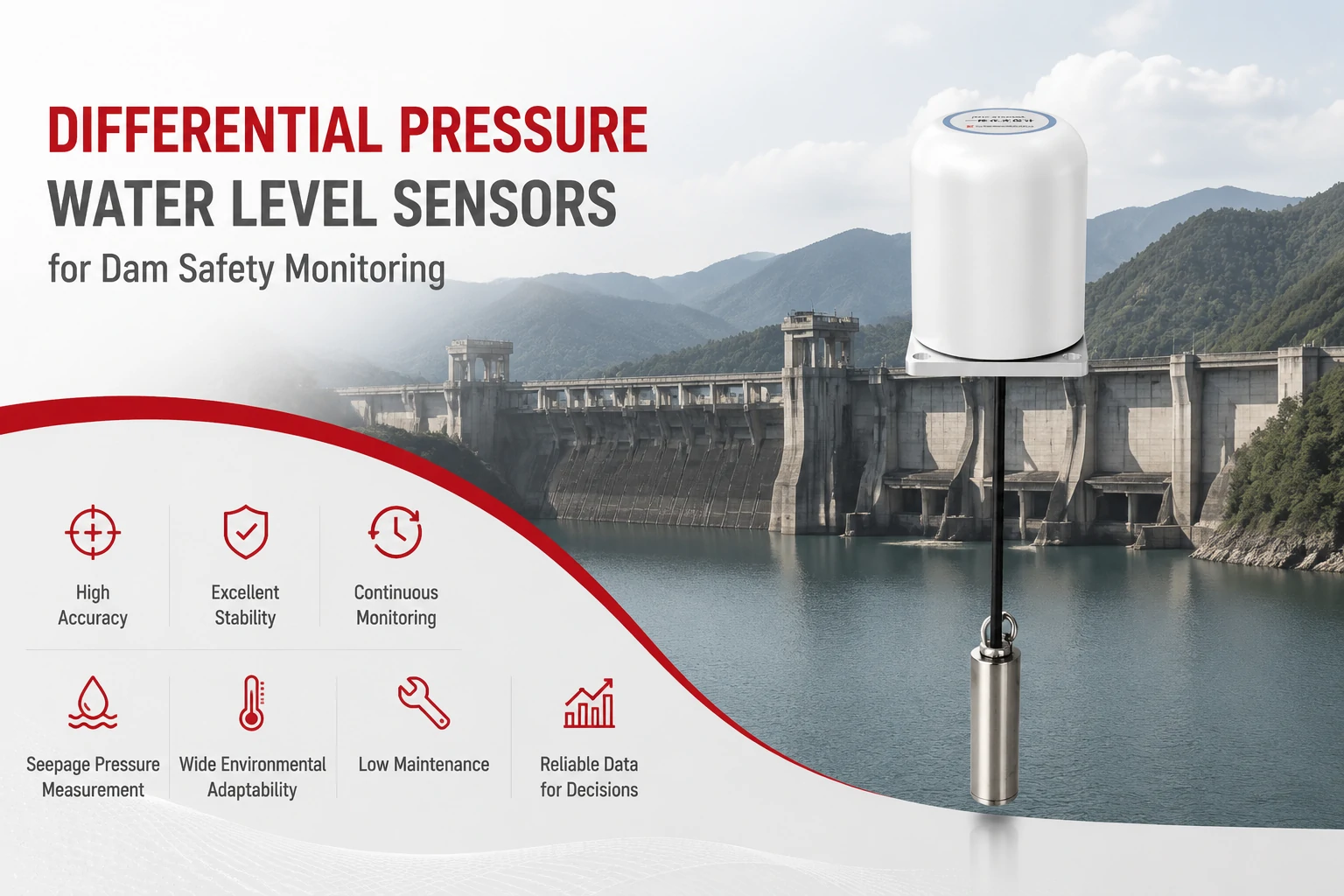
Key Takeaways The strongest fit is usually a confined, submerged, or s...
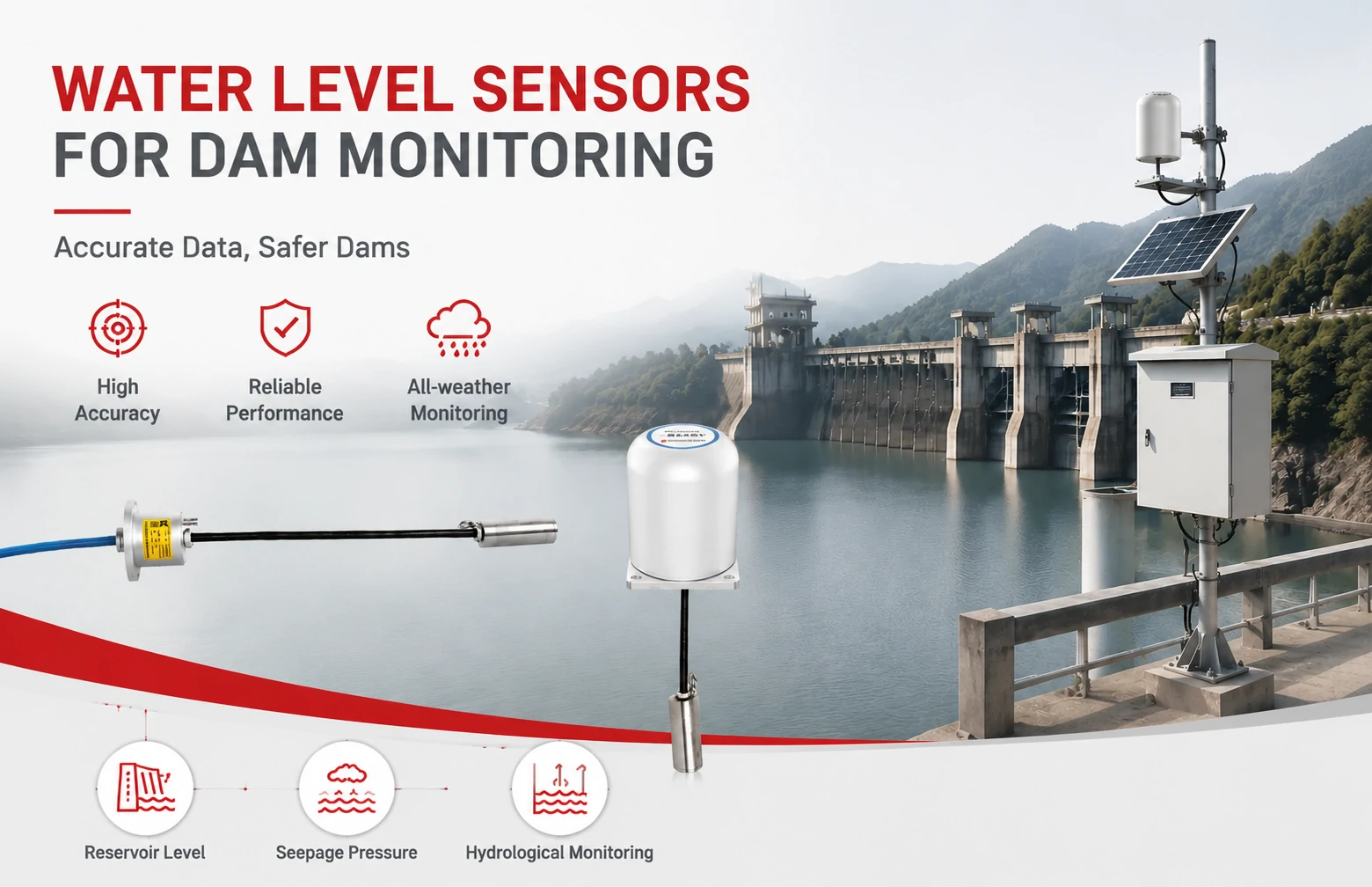
Kingmach Water Level Sensors for Dam Monitoring: A Buyer's Guide to Differential Pre...
Products
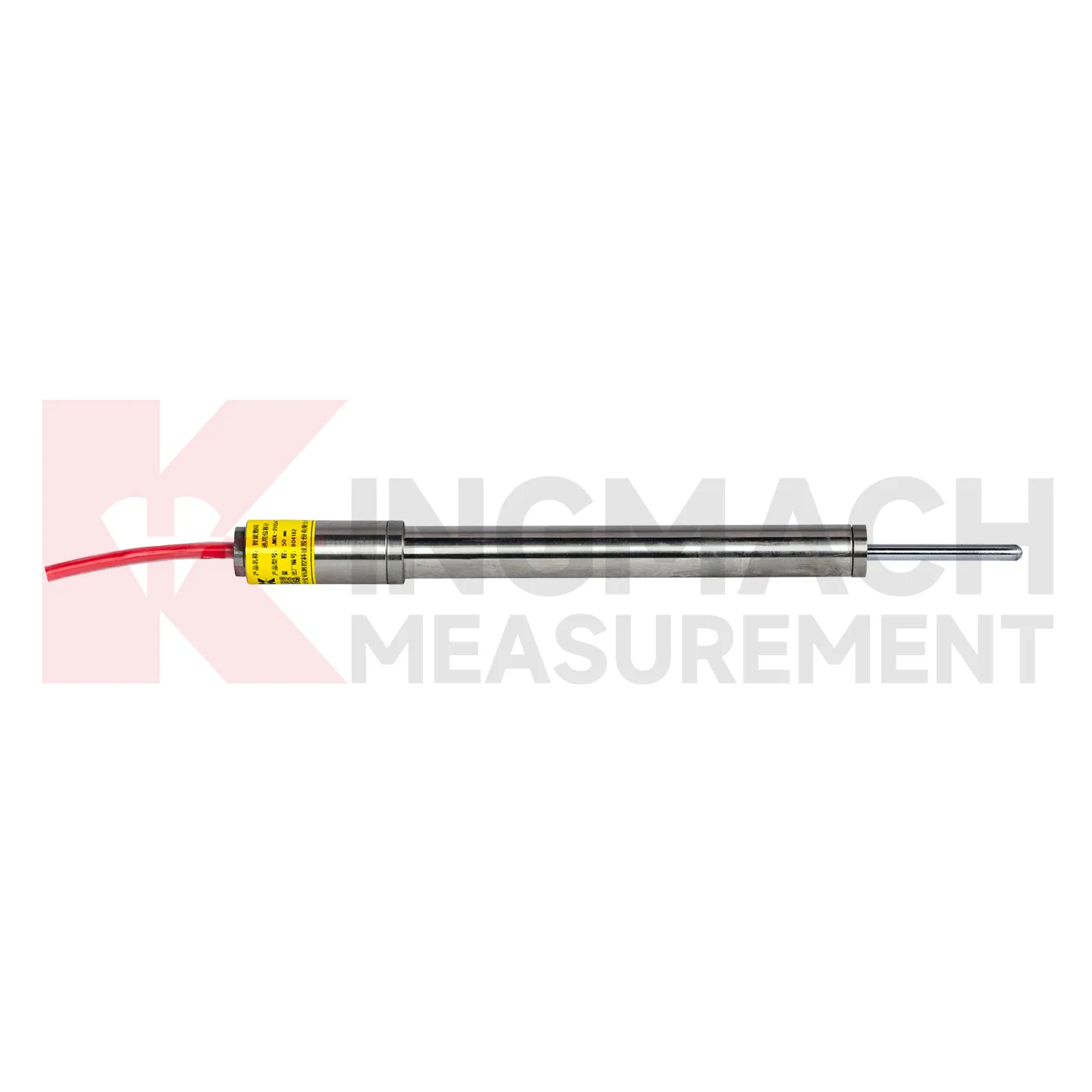
Smart General-Purpose Displacement MeterJMDL-21XXAT
View Details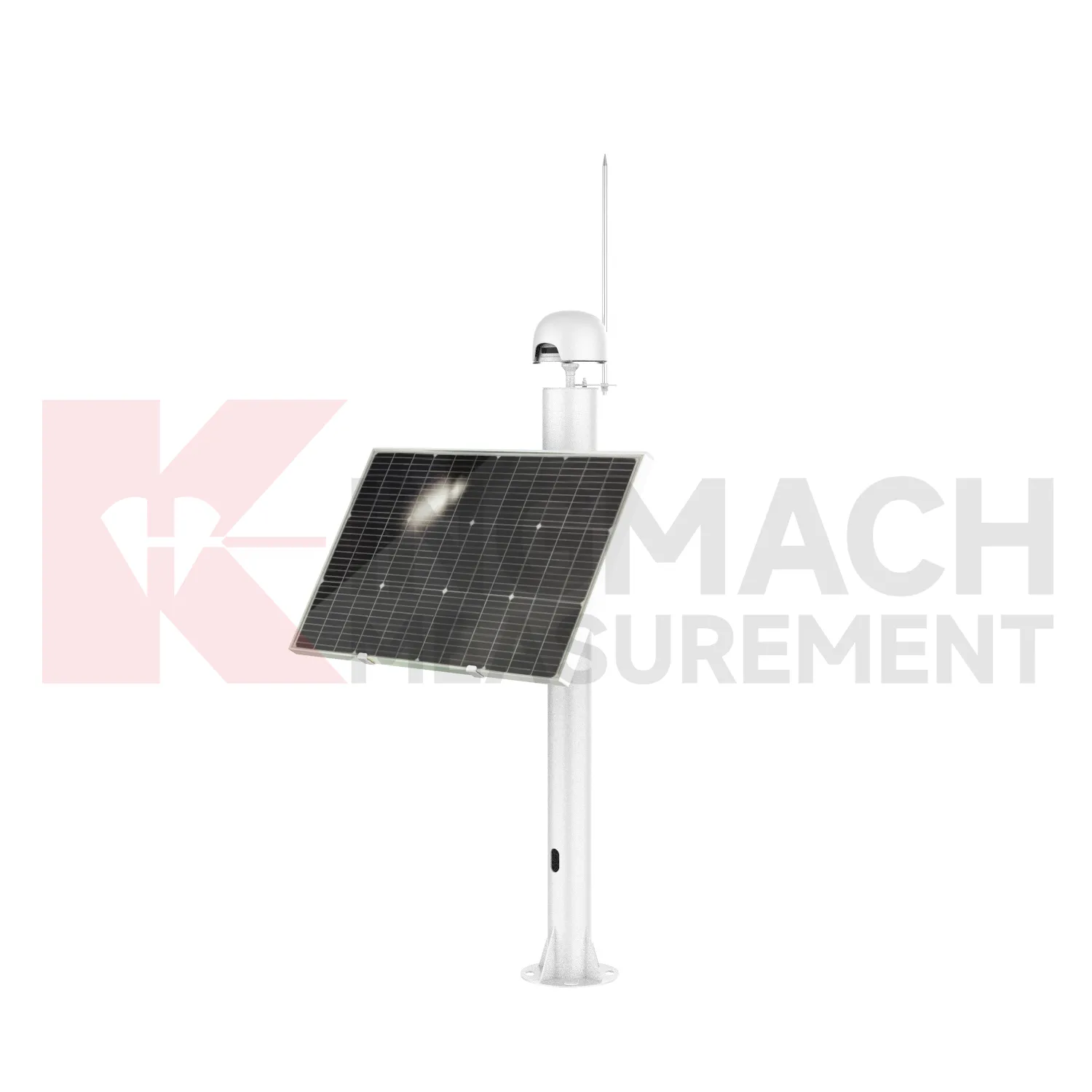
FAQ
Most displacement crack gauges work by attaching two anchors on opposite sides of a crack. A sensor bridges the gap and converts the relative displacement into an electrical signal. Depending on the sensor type — like a vibrating wire, potentiometer, or LVDT — the output can be read with a portable indicator or connected to a data logger for continuous monitoring. The raw reading is typically converted to millimeters or inches using a calibration factor provided with the gauge.
Accuracy depends on the sensor technology and the mounting quality. Under good site conditions, many gauges can resolve movements of 0.01 mm or better, but field accuracy is often limited by factors like anchor creep or temperature effects. For critical applications, it’s common to install two gauges at the same crack for redundancy and to compare results. Periodic checks with a micrometer or slip gauge can also help spot drift over time.
Yes, Kingmach displacement crack gauges are designed for field use. The sensor elements are housed in weather-resistant enclosures, and mounting hardware is typically stainless steel or galvanized. For long-term exposure, we recommend periodic inspection and, if necessary, additional protection like sun shields or protective conduits for cables.
Share your product type, target capacity, and application requirements. Our team can review the details and recommend a practical next step.
If you are interested in our products or want to become our partner.
Please leave your contact information, our team will contact you as soon as possible.
Mail: [email protected]
Contact Us: +8613808434127
Address: No. 188 Tongzipo West Rd, Changsha, Hunan, China